
In summary, the key points covered in this guide include:
- License Requirements: Most anglers aged 16 and older need a valid fishing license to fish in New York's freshwaters, with some exceptions.
- License Types and Costs: New York offers various license options, including annual, short-term, and lifetime licenses, with different fees for residents and non-residents.
- Purchasing Options: Licenses can be obtained online, by phone, or in person at authorized agents.
- Exemptions and Free Fishing Days: Certain groups are exempt from needing a license, and New York also offers designated free fishing days throughout the year.
- Border Waters and Saltwater Fishing: Special regulations apply when fishing in border waters or saltwater areas, including the need for additional permits or registrations.
Why Do You Need a Fishing License?
Fishing licenses serve several important purposes in New York:
- Conservation Efforts: A portion of the revenue generated from fishing license sales goes towards funding critical conservation efforts, such as habitat restoration, fish stocking programs, and research initiatives aimed at preserving and enhancing the state's aquatic ecosystems.
- Sustainable Management: By requiring licenses, the New York State Department of Environmental Conservation (DEC) can monitor and regulate fishing activities, ensuring the responsible and sustainable management of fish populations.
- Public Access: License fees also contribute to maintaining and improving public access to fishing areas, including boat launches, fishing piers, and other recreational facilities.
- Compliance with Regulations: Holding a valid fishing license ensures that anglers are aware of and comply with the state's fishing regulations, such as size limits, catch limits, and seasonal restrictions, which are designed to protect fish populations and promote ethical fishing practices.
Types of Fishing Licenses in New York
New York offers several types of fishing licenses to accommodate different needs and preferences. Here’s a breakdown of the available options and their costs for 2024:
Resident Licenses
- Annual License (ages 16-69): $25
- Annual Senior License (ages 70+): $5
- 7-Day License: $12
- 1-Day License: $5
- Lifetime License (up to age 69): $460
- Lifetime Senior License (age 70+): $65
Non-Resident Licenses
- Annual License: $50
- 7-Day License: $28
- 1-Day License: $10
Reduced-Fee and Free Licenses
Certain groups may qualify for reduced-fee or free annual fishing licenses in New York State, including:
- Resident military members of the New York State Organized Militia or U.S. Reserve Forces (free license)
- Resident active military members of the U.S. Armed Forces stationed outside New York State and home on leave for 30 days or less (free license)
- Non-resident military members stationed in New York State for more than 30 days (eligible for resident license prices)
- Legally blind residents of New York State (free license)
- Non-resident students attending a New York State college or university full-time (eligible for resident license prices)
- Resident veterans with a 40% or greater service-related disability ($5 reduced-fee license)
To qualify for these discounts, you’ll need to provide the required documentation and meet the eligibility criteria outlined by the DEC.
How to Purchase a New York Fishing License
Obtaining a fishing license in New York is a straightforward process, with three convenient options available:
- Online: Visit the New York State Department of Environmental Conservation website and follow the prompts to purchase your license online.
- By Phone: Call the DEC's automated license sales system at 1-866-933-2257 and follow the instructions to complete your purchase.
- In-Person: Visit an authorized license-issuing agent, such as sporting goods stores, town clerk offices, or county clerk offices, and purchase your license on-site.
When purchasing your license, be prepared to provide proof of residency if you’re a New York resident or proof of eligibility if you qualify for a reduced-fee or free license.
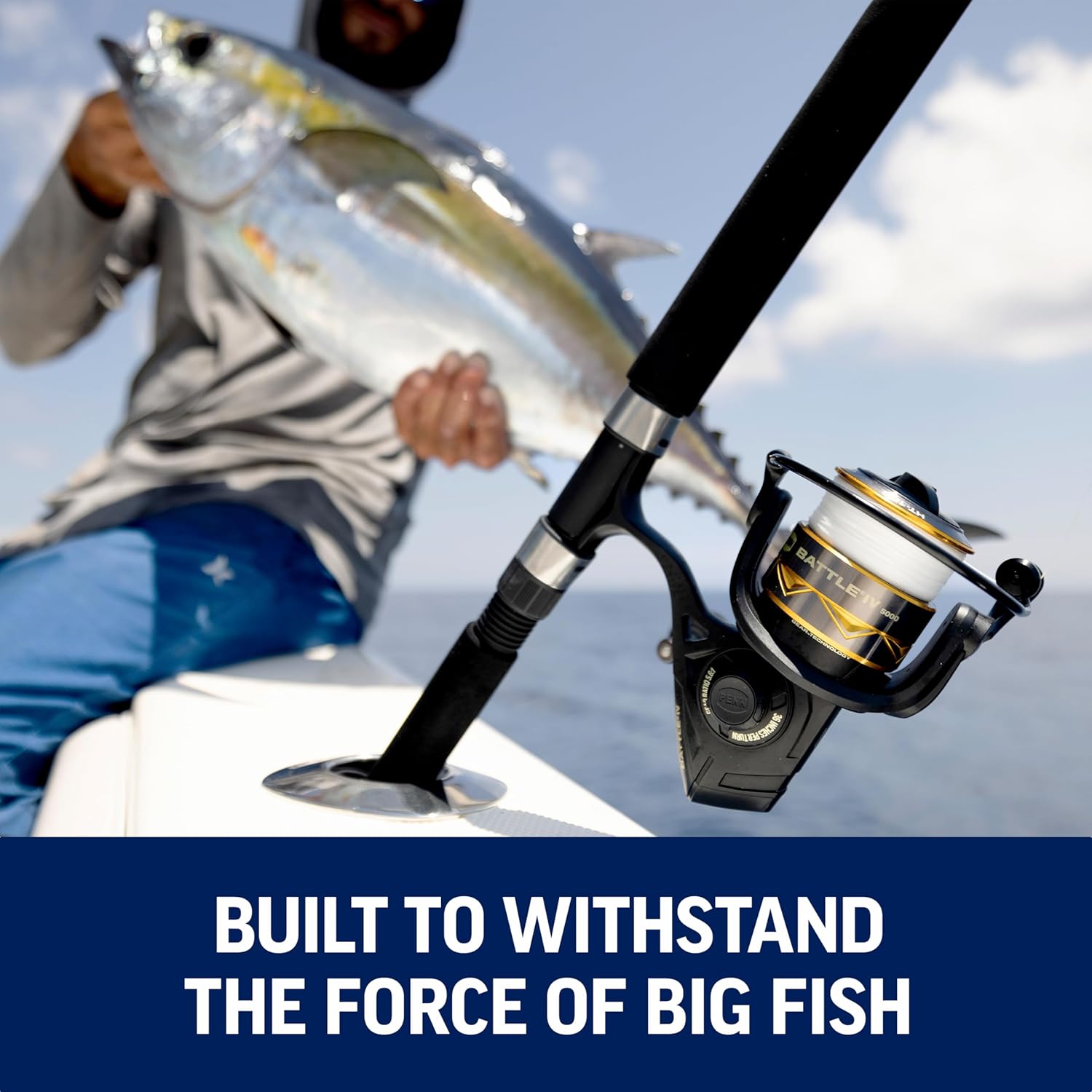
Penn Battle III Surf Spinning Combo
Fishing License Exemptions
While most anglers in New York require a fishing license, there are a few exceptions to the rule. You do not need a fishing license if you fall into one of the following categories:
- Fishing on a licensed fishing preserve
- Fishing during designated free fishing days (more on this below)
- Fishing at a free learn-to-fish clinic
- A resident landowner primarily engaged in farming (including lessees and members of their immediate families) when fishing on farm lands they are occupying and cultivating
- A farm fish pond license holder (including members of their immediate families) fishing on waters covered by the license
- A Native American living and fishing on reservation land
- A patient residing at a qualifying U.S. Veterans Administration hospital or facility in New York State
Free Fishing Days in New York
To encourage more people to experience the joys of fishing, New York State offers several free fishing days throughout the year. On these designated days, anyone can fish the freshwaters of New York State without a license, although all other fishing regulations remain in effect. The free fishing days for 2024 are:
- June 29–30, 2024
- September 28, 2024
- November 11, 2024
- February 15–16, 2025
These free fishing days are the perfect opportunity to introduce friends or family members to the sport or simply enjoy a day of fishing without the need for a license.
Fishing License Requirements for Border Waters
When fishing in waters that border other states or provinces, it’s essential to understand the specific license requirements. In some cases, your New York State fishing license may not be valid for the out-of-state portion of the water body. Here’s a breakdown of the license requirements for border waters:
| Water | State/Province Bordering | NY License Valid? |
|---|---|---|
| Lake Ontario | Ontario | No |
| Lake Erie | Ontario, Pennsylvania | No |
| St. Lawrence River | Ontario, Quebec | No |
| Niagara River | Ontario | No |
| Lake Champlain | Quebec | No |
| Lake Champlain | Vermont | Yes |
| Delaware River & West Branch Delaware River (along boundary) | Pennsylvania | Yes |
| Greenwood Lake | New Jersey | Yes, from boat or ice only |
| Indian Lake | Connecticut | Yes, from boat or ice only |
For Lake Champlain, a New York State fishing license is valid for all Vermont portions, except The Inland Sea (including “The Gut”), Mallett’s Bay, Missisquoi Bay, and all rivers.
It’s crucial to familiarize yourself with the specific regulations for the water body you plan to fish to ensure you have the appropriate licenses and permits.
Recreational Marine Fishing Registry
If you plan to fish for migratory marine fish species, such as striped bass, hickory shad, and river herring, or saltwater fish species in the Marine and Coastal District of New York, you’ll need to enroll in the Recreational Marine Fishing Registry. This requirement applies to all anglers aged 16 and older, regardless of whether they hold a freshwater fishing license.
You can enroll in the Recreational Marine Fishing Registry at any location where fishing licenses are sold or online through the DEC’s website.
Saltwater Fishing Licenses and Permits
While the Recreational Marine Fishing Registry is free for New York residents and visitors, the state offers various other fishing licenses and permits for different saltwater fishing needs and activities:
- Freshwater Fishing Licenses: If you plan to fish in New York's inland waters, such as lakes, rivers, and streams, you'll need a freshwater fishing license. These licenses come in different durations, including annual, 7-day, and 1-day options, with varying fees for residents and non-residents.
- Combination Licenses: For avid anglers who enjoy both freshwater and saltwater fishing, New York offers combination licenses that cover both. These licenses can be purchased annually or as lifetime licenses, providing convenience and cost-effectiveness in the long run.
- Commercial Fishing Licenses: If you're interested in fishing for commercial purposes, you'll need to obtain a commercial fishing license from the DEC. These licenses are subject to specific requirements and regulations, ensuring sustainable practices in the industry.
- Specialized Licenses and Permits: Depending on your fishing activities, you may need additional licenses or permits. For example, if you plan to harvest lobsters, you'll need a Recreational Lobster Permit, which is only available to New York residents.