
Quick Answer: Florida residents aged 65 or older are fully exempt from purchasing any recreational fishing or hunting license — including saltwater fishing, freshwater fishing, snook permits, lobster permits, and more. All you need is a valid Florida Driver's License or ID Card as proof. The only exceptions are the federal duck stamp (waterfowl hunters) and a tarpon tag (if harvesting a tarpon for a record attempt). A free Resident 65+ Hunt/Fish Certificate is available optionally at GoOutdoorsFlorida.com or your local county tax collector's office.
What the Senior Exemption Covers
Florida residents aged 65 or older are exempt — under Florida Statute 379.353 — from purchasing the following recreational licenses and permits:
| License / Permit | Covered? |
|---|---|
| Saltwater fishing license | ✅ Exempt |
| Freshwater fishing license | ✅ Exempt |
| Hunting license | ✅ Exempt |
| Snook permit | ✅ Exempt |
| Spiny lobster permit | ✅ Exempt |
| Management area permit | ✅ Exempt |
| Muzzleloading gun permit | ✅ Exempt |
| Turkey permit | ✅ Exempt |
| Florida waterfowl permit | ✅ Exempt |
| Archery permit | ✅ Exempt |
| Crossbow permit | ✅ Exempt |
| Deer permit | ✅ Exempt |
| Federal duck stamp | ❌ Must purchase |
| Tarpon tag (record harvest only) | ❌ Must purchase |
Proof of Age and Residency: What You Must Carry
To fish or hunt under the senior exemption, you must have proof of both age and Florida residency on your person at all times while on the water. Acceptable forms of identification include:
- A valid Florida Driver's License
- A Florida Identification Card issued by the Department of Highway Safety and Motor Vehicles
FWC officers conduct routine checks and will ask to see this documentation. Your out-of-state driver's license or passport is not sufficient — the documentation must establish both your age (65+) and Florida residency.
The Free Resident 65+ Hunt/Fish Certificate
While not legally required, the Resident 65+ Hunt/Fish Certificate is a practical tool worth obtaining. It is available at no cost and serves as a consolidated, official proof of your exemption status.
Why get it:
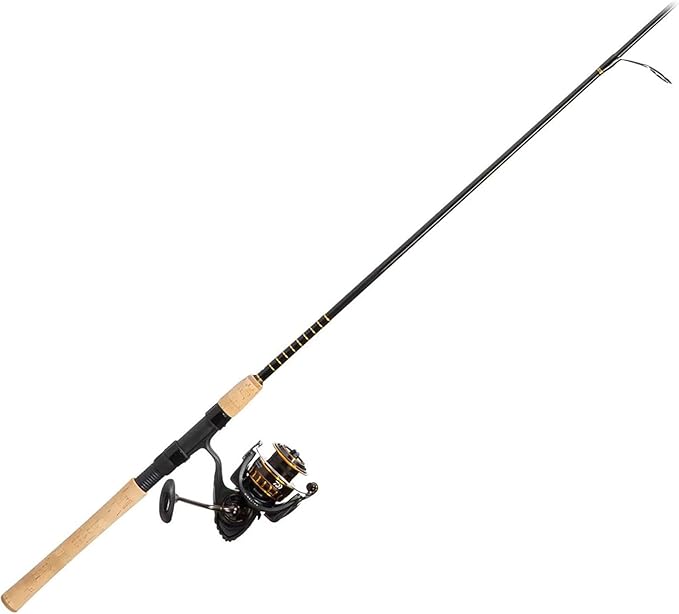
Daiwa BG Spinning Combo
- Convenience — One document proves both age and residency; no need to carry a separate ID for each activity.
- Clarity for officers — The certificate clearly states your exemption status, reducing any confusion during routine checks.
- FWC record-keeping — Your participation helps the state track senior angler activity, which supports conservation funding decisions.
How to get it (free):
- Online: GoOutdoorsFlorida.com
- In person: Your local county tax collector's office
- Phone: 1-888-FISH-FLORIDA (347-4356)
- App: Fish|Hunt Florida mobile app
The certificate has no expiration date but reflects regulations at the time of issuance. Always verify compliance with the current year’s rules at myfwc.com/license.
The Two Exceptions: What You Still Need
Despite the broad senior exemption, two items are never covered for anyone, regardless of age:
1. Federal Duck Stamp
If you plan to hunt migratory waterfowl (ducks, geese), federal law requires a Federal Duck Stamp. For 2025–26, the stamp costs $30.50 and is available at GoOutdoorsFlorida.com or at US Post Offices. This is a federal requirement, not a state one, so Florida’s exemption cannot override it.
2. Tarpon Tag
Tarpon in Florida is a catch-and-release only fishery. The only reason to purchase a Tarpon Tag ($51.50/year) is if you are pursuing a Florida state or world record and intend to bring the fish out of the water. One tag allows the harvest of one tarpon per year. The vast majority of senior anglers targeting tarpon will never need this tag — simply practicing catch-and-release requires no tag whatsoever. Details at FWC Tarpon regulations.
Important correction from older versions of this article: The deer permit is not an exception — deer permits are fully covered under the senior exemption per Florida Statute 379.353. You do not need to purchase a deer permit as a qualifying Florida resident 65+.
The State Reef Fish Angler Designation: A Critical Requirement for Boat Anglers
This is one of the most important and most misunderstood requirements for senior anglers in Florida.
If you fish for certain reef fish species from a private vessel, you are required to obtain the State Reef Fish Angler designation — even if you are 65 or older and exempt from all other license requirements.
This designation is free and must be renewed annually. It is part of the State Reef Fish Survey (SRFS), which collects data on reef fish harvest statewide.
Covered reef species (designation required when fishing from a private boat):
- Snappers: mutton, yellowtail, red, vermilion
- Groupers: gag, red, black
- Hogfish
- Amberjack: greater and lesser
- Banded rudderfish
- Almaco jack
- Gray triggerfish
How to get it (free):
- GoOutdoorsFlorida.com
- Fish|Hunt Florida mobile app
- 1-888-FISHFLORIDA (347-4356)
- Tackle shops, sporting goods stores, and tax collector offices
You do not need this designation if you are fishing from a licensed charter boat or party boat, as those operators have a separate reporting mechanism. Full details at FWC State Reef Fish Survey FAQs.
Additional Permits That Are Always Free for Everyone
These permits are required for all anglers 16+ regardless of age — but they cost nothing:
- Saltwater Shoreline Fishing License — Allows Florida residents to fish saltwater species from land or structures attached to land. Free for all residents. Required to carry even though there's no fee. Seniors are exempt from even needing this, but it can be convenient to have on file.
- Shore-Based Shark Fishing Permit — Required for anyone 16+ fishing for sharks from shore, jetties, bridges, or piers. Free but requires completing an online educational course. No exemptions, even for seniors. Available at GoOutdoorsFlorida.com.
- Blue Crab Trap Registration — Free, required if you use crab traps.
- Stone Crab Trap Registration — Free, required if you use stone crab traps.
2026 Florida Free Fishing Days Calendar
Even though you don’t need a license, these dates are useful for introducing family and friends to fishing — everyone, including non-residents, can fish without a license on these days. All other regulations (bag limits, size limits, seasons) still apply.
Freshwater Free Fishing Days 2026:
- April 4–5, 2026 (first consecutive Saturday–Sunday in April)
- June 13–14, 2026 (second consecutive Saturday–Sunday in June)
Saltwater Free Fishing Days 2026:
- June 6–7, 2026 (first consecutive Saturday–Sunday in June)
- September 5, 2026 (first Saturday in September)
- November 28, 2026 (Saturday following Thanksgiving)
Other Exemptions Worth Knowing
The senior exemption is not the only way to fish license-free in Florida. As a senior angler, you may fish with others who qualify under different exemptions:
- Children under 16 are fully exempt from license requirements.
- Home county homestead rule — Residents may freshwater fish or hunt on their own homestead (or that of their spouse or minor child) without a license, regardless of age.
- Private fish pond exemption — No license required to fish in a man-made pond of 20 acres or less entirely within private property with no surface water connection to public waters.
- Charter and for-hire vessels — All anglers aboard a licensed charter or for-hire vessel are covered by the captain's vessel license for saltwater fishing.
- Licensed fishing piers — Many piers hold blanket saltwater pier licenses covering all anglers on the pier.
- Food stamps / Medicaid — Florida residents receiving food stamps, temporary cash assistance, or Medicaid can fish saltwater species from land without a license (vessel or diving still requires a license).
Full list at FWC Do I Need a License?
Fishing Regulations That Still Apply — No Exemptions
Your exemption from licensing requirements does not exempt you from any other fishing regulation. The following rules apply to all anglers, including seniors:
Bag limits — The maximum number of each species you may take per day. For example, largemouth bass: 5 per day with a 12-inch minimum; snook: 1 per day during open season.
Size limits — Undersized fish must be released immediately and carefully. For example, redfish: 18–27 inches in slot limit on most coasts.
Season closures — Some species have closed seasons. Snook, for example, has seasonal closures tied to spawning. Gag grouper in the Atlantic is closed January 1–April 30 in 2026.
Gear restrictions — Certain methods are prohibited regardless of your license status (e.g., no snagging, no use of treble hooks with live bait in certain areas, Boca Grande Pass jig restrictions).
Catch-and-release rules — Even catch-and-release fishing requires a license for most anglers (seniors are exempt, but the rule clarifies that simply handling and releasing fish still constitutes “taking” under Florida law).
Always check the current year’s regulations at myfwc.com or download the FWC Fishing Regulations booklet before each trip.
Penalties for Violating Fishing Regulations
While seniors are exempt from license requirements, violations of other fishing regulations carry real consequences. Florida fishing violations fall under Florida Statute Chapter 379 and are typically classified as civil infractions or misdemeanors:
- First-degree misdemeanor (e.g., catching a prohibited species, exceeding bag limits for certain species): Up to $1,000 in fines and up to 1 year in jail.
- Second-degree misdemeanor (e.g., general violations of size and bag limits): Up to $500 and up to 60 days in jail.
- Civil infractions for minor violations: Fines typically range from $50 to $500 depending on severity.
- Aggravated violations involving commercial-scale illegal take: Fines up to $100,000 and felony charges are possible for serious repeat offenses.
- License/privilege revocation — The FWC may revoke your right to fish Florida waters.
When in doubt about a regulation, call FWC at 1-888-FISH-FLORIDA or consult FWC FAQs before your trip.
Practical Tips for Senior Anglers in Florida
1. Always carry your Florida ID. Even with the senior exemption, you need proof of age and Florida residency on the water at all times. A valid Florida Driver’s License or Florida ID Card suffices. Out-of-state IDs are not accepted.
2. Get the free 65+ certificate. It simplifies interactions with officers and takes five minutes to obtain at GoOutdoorsFlorida.com.
3. Register for the State Reef Fish Survey before your first reef trip. If you plan to fish for snapper, grouper, hogfish, or amberjack from a private boat, sign up for the free State Reef Fish Angler designation in advance. Failing to have it is a violation even for seniors.
4. Buy the Federal Duck Stamp early if you hunt waterfowl. The 2025–26 Federal Duck Stamp ($30.50) is valid through June 30, 2026. The 2026–27 stamp becomes available July 1, 2026.
5. Check seasonal closures before targeting reef fish. Gag Grouper in the Atlantic is closed January 1 – April 30, 2026. Snook has closed seasons on different coasts. Always verify at myfwc.com or call 1-888-FISH-FLORIDA.
6. Download the Fish|Hunt Florida app. The FWC’s official app lets you view regulations, look up bag limits, and manage your licenses and designations from your phone.
7. Plan around Florida’s 2026 Free Fishing Days. These are ideal dates to bring grandchildren or introduce friends to fishing — everyone fishes without a license, including non-residents.
Florida’s Best Fishing Waters for Senior Anglers
Florida offers extraordinary fishing diversity across its 1,350 miles of coastline and 7,700 lakes. Senior anglers fishing under the exemption can target:
Saltwater:
- Tampa Bay — Exceptional year-round snook, redfish, and spotted seatrout. One of the most productive inshore fisheries on the Gulf Coast.
- Florida Keys — Permit, bonefish, tarpon, and offshore reef fish. World-class fishing with numerous guides familiar with senior anglers.
- Mosquito Lagoon (Canaveral National Seashore) — Renowned for trophy redfish and one of the largest lagoon fisheries in the eastern US.
- Boca Grande Pass — Legendary spring tarpon fishery, the "Tarpon Capital of the World." Note the specific gear restrictions within the Pass.
Freshwater:
- Lake Okeechobee — Florida's largest lake and one of the premier largemouth bass fisheries in the country, with FWC stocking programs supporting consistent catch rates.
- St. Johns River — Over 300 miles of navigable freshwater with excellent bass and crappie fishing.
- Kissimmee Chain of Lakes — Seven connected lakes in Central Florida with strong largemouth bass populations.
Useful Resources for Florida’s Senior Anglers
- Florida Fish and Wildlife Conservation Commission (FWC) — Official regulations, species guides, and license information
- GoOutdoorsFlorida.com — Free 65+ certificate, license purchases, State Reef Fish Angler sign-up
- FWC Recreational License FAQs — Answers to common exemption questions
- FWC State Reef Fish Survey — Required designation for reef fish anglers 16+, including seniors
- FWC Saltwater Fishing Regulations — Bag limits, size limits, season dates
- FWC Freshwater Fishing Regulations — Inland species regulations
- FWC License-Free Fishing Days — 2026 calendar
- FWC Citizen Science Programs — Volunteer data collection opportunities
Frequently Asked Questions
Q: I just turned 65. When does my exemption take effect?
A: Immediately. The moment you reach age 65, you qualify for the senior exemption — there’s no waiting period and no application required. Just carry your Florida Driver’s License or ID Card.
Q: My Florida Driver’s License expired. Can I still use it?
A: An expired Florida Driver’s License may not be accepted as valid proof of residency. Obtain a renewed license or a Florida ID Card from your local DHSMV office, or get the free 65+ Hunt/Fish Certificate from GoOutdoorsFlorida.com.
Q: I moved to Florida recently and I’m over 65. Do I qualify?
A: To qualify as a Florida resident for fishing purposes, you must have declared Florida as your sole state of residence. Proof is your Florida Driver’s License or Florida ID Card. If you’ve recently moved, update your license with the DHSMV before fishing under the exemption.
Q: Do I need a snook permit to catch-and-release snook?
A: No. You do not need a snook permit to catch and release snook. A snook permit (currently $10/year for residents) is only required to keep snook during open season. Seniors are exempt from the snook permit requirement in any case.
Q: Can I fish in federal waters (beyond 3 miles offshore) without a license?
A: As a Florida resident 65+, your exemption covers state-regulated activities. In federal waters, federal regulations apply. However, no separate federal recreational saltwater fishing license is currently required for recreational anglers on private vessels in federal waters. Check NOAA Fisheries for federal regulations on specific species.
Q: Does my 65+ exemption apply if I’m visiting another state?
A: No. The Florida senior exemption applies only in Florida. Each state sets its own licensing requirements. Check the relevant state’s fish and wildlife agency website before fishing out of state.
Q: Do I need a license to help my grandchild bait their hook?
A: Yes. Under Florida law, anyone who assists in the act of taking fish — including baiting hooks, reeling in the line, or setting gear — is considered to be fishing and requires a license (or a valid exemption). Children under 16 are exempt; if you are 65 or older, you are also exempt. But an adult between ages 16–64 assisting a child does need a license.
Q: What is the Shore-Based Shark Fishing Permit and do I need it?
A: If you fish for sharks from shore, jetties, piers, or bridges (anywhere attached to land), you need this free permit. It has no exemptions, meaning seniors 65+ must still obtain it. It requires completing a free online educational course at GoOutdoorsFlorida.com. It is not required for shark fishing from a boat.
Regulations verified March 2026 against official FWC sources. Florida fishing regulations can change — always confirm current rules at myfwc.com or call 1-888-FISH-FLORIDA (347-4356) before your trip.