
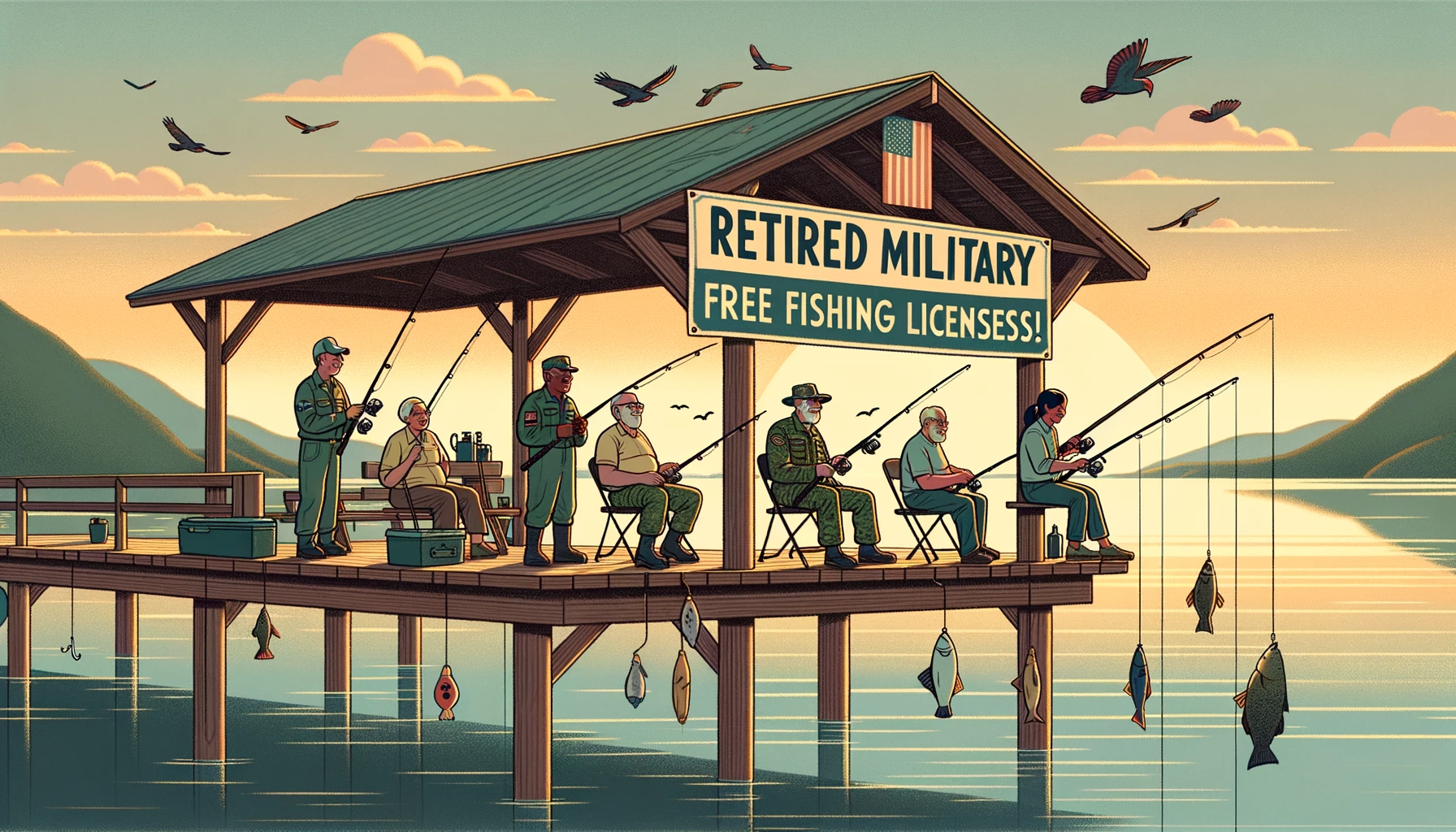
Understanding State Policies for Retired Military Fishing Licenses
While some states offer free fishing licenses to retired military members, others provide significant discounts or have specific eligibility requirements. Let’s take a closer look at some examples:
- Florida: The Sunshine State offers a highly advantageous "Military Gold Sportsman's License" for both active duty and retired military personnel who are Florida residents. This license, which costs only $20 annually (compared to $100 for the regular Gold Sportsman's License), includes hunting, saltwater fishing, and freshwater fishing privileges, as well as various permits for deer, wildlife management areas, archery, and more.
- Texas: Texas provides a free "Super Combo Hunting and All-Water Fishing Package" to disabled veterans, which includes a resident hunting license, a variety of fishing privileges, and an all-water fishing license that covers both freshwater and saltwater fishing.
- Georgia: In Georgia, retired military members can obtain a one-time free honorary hunting and fishing license, which remains valid for the individual's lifetime.
- New Jersey: New Jersey offers free freshwater fishing licenses to resident disabled veterans with a service-connected disability of 70% or more.
- California: The Golden State provides reduced-fee fishing licenses for disabled veterans who meet certain eligibility criteria.
It’s essential to check with your state’s fish and wildlife agency or veterans affairs office to determine the specific benefits and requirements for retired military fishing licenses in your area.
How to Obtain a Retired Military Fishing License
The process for obtaining a retired military fishing license varies by state, but here are some general steps to follow:
- Determine Eligibility: Confirm that you meet the state's requirements for a retired military fishing license. This may include proof of residency, disability rating, or other criteria.
- Gather Required Documentation: Collect all necessary documents, such as your military ID, proof of residency, disability rating paperwork, and any additional forms required by your state.
- Choose an Application Method: Depending on your state, you may be able to apply for a retired military fishing license online, by mail, or in person at a designated location, such as a fish and wildlife agency office or tax collector's office.
- Submit Your Application: Follow the instructions provided by your state to complete and submit your application, along with any required fees or documentation.
- Receive Your License: Once your application is processed and approved, you will receive your retired military fishing license, which you should carry with you whenever you go fishing.
Some states, like Florida, offer online verification systems that allow you to apply for and obtain your license entirely online, streamlining the process significantly.
Practical Tips for Using Your Retired Military Fishing License
Now that you have your retired military fishing license, it’s crucial to understand how to use it effectively and stay compliant with state regulations. Here are some practical tips to keep in mind:

Penn Battle III Surf Spinning Combo
- Carry Your License: Always carry your physical fishing license or have a digital copy readily available on your smartphone when fishing. You may be required to present it to law enforcement or fish and wildlife officials upon request.
- Understand Catch Limits and Size Restrictions: Familiarize yourself with your state's catch limits and size restrictions for various fish species. These regulations help maintain healthy fish populations and ensure sustainable fishing practices.
- Stay Informed About Seasonal Changes: Keep track of any seasonal changes or updates to fishing regulations in your state. Some areas may have specific seasons for certain fish species or temporary closures to protect spawning habitats.
- Use Technology to Your Advantage: Take advantage of smartphone apps and digital tools that can help you store your fishing license, track your catches, and stay updated on the latest fishing regulations and weather conditions.
- Know Your Boundaries: Be aware of any boundaries or restricted areas where fishing may be prohibited or limited, such as marine protected areas, private property, or military installations.
- Practice Responsible Fishing: As a retired military member and steward of our natural resources, set a positive example by practicing responsible fishing techniques, properly disposing of waste, and promoting conservation efforts.
Frequently Asked Questions
- Can I use my retired military fishing license in multiple states?
- In most cases, a retired military fishing license is specific to the issuing state and cannot be used in other states. However, some states have reciprocal agreements that allow for the use of certain licenses across state lines. Check with your state's fish and wildlife agency for more information on reciprocity.
- Do I need additional permits or stamps in addition to my retired military fishing license?
- Depending on your state and the type of fishing you plan to do, you may need additional permits or stamps, such as a trout stamp, salmon stamp, or saltwater fishing permit. Review your state's fishing regulations or consult with your local fish and wildlife agency to determine any additional requirements.
- Can I fish on military installations with my retired military fishing license?
- Access to fishing on military installations may vary depending on the specific location and current security protocols. Some installations may require a separate fishing permit or have specific regulations in place. Contact the installation's natural resources office or MWR (Morale, Welfare, and Recreation) department for guidance on fishing access and requirements.
- Are there any discounts on fishing gear or equipment for retired military members?
- Many outdoor retailers and fishing gear manufacturers offer special discounts or promotions for retired military members. Some popular programs include Bass Pro Shops' "Legendary Salute" discount, Cabela's "Military Discount," and Orvis' "Veteran's Discount." Check with your favorite fishing gear retailers to see if they offer any military discounts or special offers.
- How can I get involved in fishing programs or events for retired military members?
-
There are numerous organizations and programs dedicated to providing fishing opportunities for retired military members and veterans. Some notable examples include:
- Project Healing Waters Fly Fishing: Offers fly fishing classes, outings, and retreats for disabled active military service personnel and disabled veterans.
- Heroes on the Water: Provides kayak fishing experiences for veterans, active-duty military personnel, first responders, and their families.
- Take a Vet Fishing: Organizes free fishing trips and events for veterans and their families across the United States.
- Reach out to these organizations or search for local fishing clubs or veterans groups in your area to find opportunities to connect with fellow retired military members who share your passion for fishing.