
Quick Answer: A North Carolina resident annual inland fishing license costs $30 in 2026. Nonresidents pay $54. A combined resident inland + coastal (Unified) license is $49. Licenses are valid for 12 months from the date of purchase and are required for anyone aged 16 or older fishing in public waters.
Fishing is one of North Carolina’s most popular outdoor pursuits — from trophy largemouth bass in Jordan Lake and Falls Lake to trophy red drum along the Outer Banks, the state offers world-class angling across its rivers, mountains, sounds, and coastline. Before you cast your line in any public water, you need a valid fishing license. This guide covers every license type, current 2026 prices, who qualifies for exemptions, where to buy, and what happens if you fish without one.
2026 Price Changes: What’s New
The NC Wildlife Resources Commission proposed a CPI-adjusted fee increase of approximately 3.4% (rounded to the next whole dollar) for all licenses, permits, and stamps. These increases took effect in 2026. The 2023-era prices that appeared on many websites — $25 resident inland, $45 nonresident inland, $16 resident coastal — are no longer current. Use the tables below for verified 2026 fees.
Complete 2026 License Fees
All prices sourced from the Go Outdoors North Carolina official licensing portal and NC Wildlife Resources Commission via eRegulations. A $2 transaction fee applies to online and phone purchases.
Inland Fishing Licenses
| License Type | Resident | Nonresident |
|---|---|---|
| Annual State Inland Fishing | $30 | $54 |
| 10-Day Inland Fishing | $11 | $28 |
| Lifetime Comprehensive Inland Fishing (adult) | $315 | N/A |
| Lifetime Comprehensive Inland Fishing (senior) | $19 | N/A |
| Special Device Inland Fishing (annual) | $95 | $630 |
Annual inland licenses are valid for 12 months from the purchase date, not on a calendar-year basis. The inland license covers all public mountain trout waters, trout waters on game lands, and joint waters. It does not cover coastal fishing waters.
Coastal Recreational Fishing Licenses (CRFL)
| License Type | Resident | Nonresident |
|---|---|---|
| Annual Coastal Recreational Fishing | $19 | $38 |
| 10-Day Coastal Recreational Fishing | $8 | $14 |
| Lifetime CRFL – Adult (age 12+) | $315 | $630 |
| Lifetime CRFL – Youth (age 1–11) | $189 | $189 |
| Lifetime CRFL – Infant (under age 1) | $126 | $126 |
| Lifetime CRFL – Senior (eligible residents) | $19 | N/A |
The CRFL authorizes fishing in coastal and joint waters — sounds, saltwater rivers, and the Atlantic Ocean. It does not cover inland freshwater fishing.
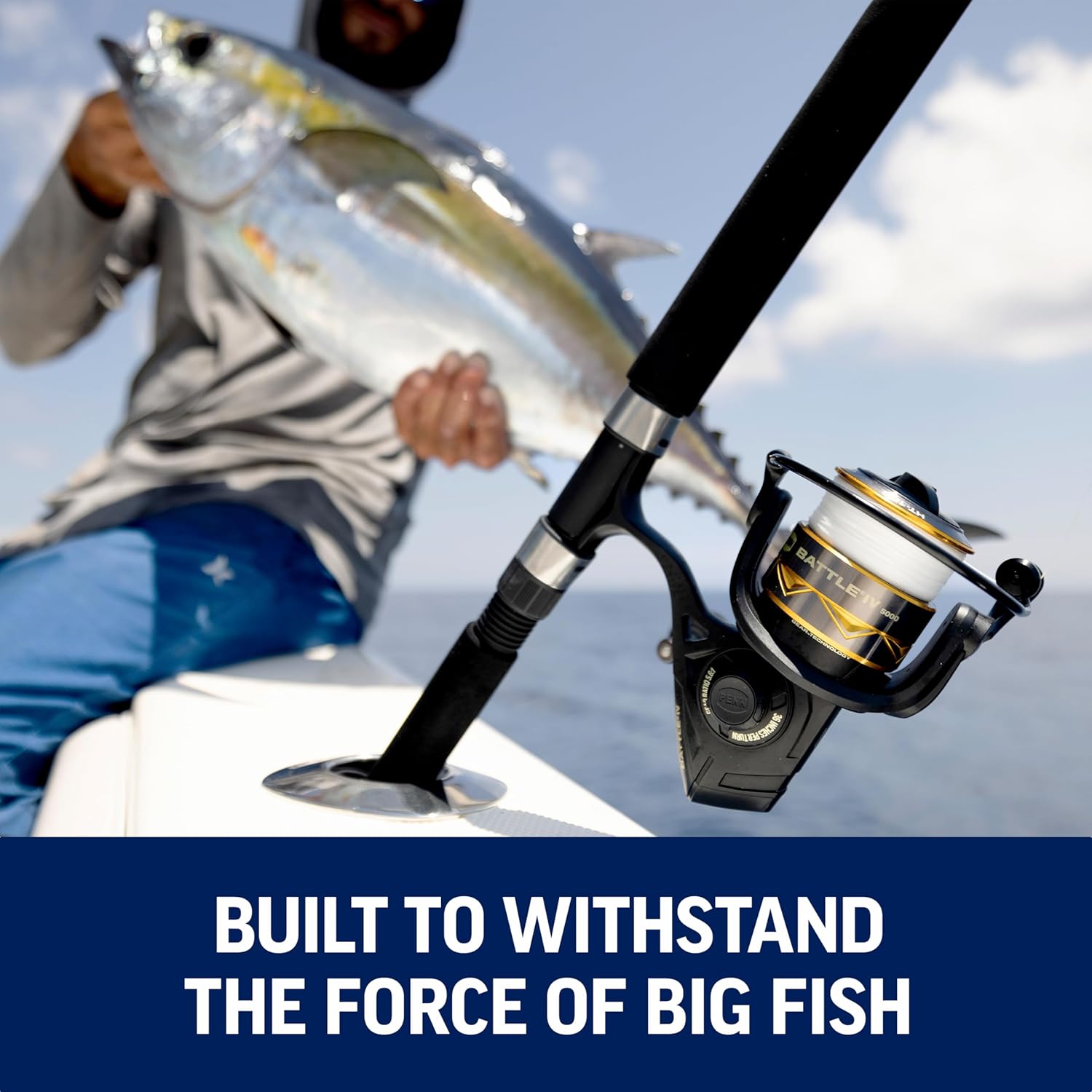
Penn Battle III Surf Spinning Combo
Unified (Inland + Coastal) License — Residents Only
| License Type | Resident | Nonresident |
|---|---|---|
| Annual Unified Inland/Coastal Recreational Fishing | $49 | N/A |
| Lifetime Unified Inland/Coastal Recreational Fishing | $567 | N/A |
The Unified license is the best value for NC residents who fish both fresh and saltwater. At $49 annually, it replaces the need to purchase separate inland ($30) and coastal ($19) licenses, saving residents exactly nothing at list price — but combining them into a single license for convenience.
Activity Packages (Residents Only)
The Go Outdoors NC portal sells bundled packages that combine the license types above into a single purchase:
| Package | Price | Includes |
|---|---|---|
| Inland Angler | $73 | Everything needed to fish inland waters |
| Coastal Angler | $60 | Everything needed to fish coastal waters |
| Avid Angler | $90 | Inland + coastal fishing statewide |
Who Is Exempt from a Fishing License
Not everyone needs to purchase a license to fish in North Carolina. The following exemptions apply in 2026:
| Exemption | Details |
|---|---|
| Children under 16 | No license required for anglers younger than 16 |
| Private pond fishing | No license required to fish in private ponds on privately owned land |
| Saltwater charter passengers | No CRFL required when fishing aboard a licensed saltwater charter vessel |
| Military on leave (residents) | NC residents on active military leave may fish for up to 30 days without a license; carry your military ID and leave documentation |
| Legally blind residents | Eligible for a free Unified Inland/Coastal Recreational Fishing License |
| Adult care home residents | Eligible for a free Unified Inland/Coastal Recreational Fishing License (valid during residency) |
| Medicaid/Food Stamps/Work First recipients | Eligible for a free Subsistence Unified Inland/Coastal License Waiver through county DSS offices |
Note: Even if you don’t have a rod — if you’re helping someone fish by baiting hooks or managing their gear — you still need a valid license.
Discounted Licenses for Veterans and Disabled Residents
North Carolina offers significantly reduced lifetime licenses for qualifying residents:
| License Type | Price |
|---|---|
| Disabled Veteran Inland Fishing (lifetime) | $14 |
| Disabled Veteran Coastal Recreational Fishing (lifetime) | $14 |
| Totally Disabled Inland Fishing (lifetime) | $14 |
| Totally Disabled Coastal Recreational Fishing (lifetime) | $14 |
| Unified Lifetime License (permanent disability, 50%+ disabled veteran) | $11 + $3 processing fee |
These require documentation through the NC Wildlife Resources Commission. Some sensitive license types are only available by mail or in person — they cannot be purchased through the online portal.
Lifetime License: Is It Worth It?
At $315 for a lifetime inland or coastal license, the breakeven calculation is straightforward for many NC anglers:
- Annual inland license at $30/year: Lifetime license pays off after ~10.5 years
- Annual coastal license at $19/year: Lifetime coastal license ($315) pays off after ~16.6 years
- Unified lifetime license at $567: Compared to the $49 annual unified license, breakeven is ~11.6 years
Lifetime licenses also carry no future renewal hassle and are unaffected by future fee increases. For a 40-year-old NC resident who fishes regularly, a lifetime license is almost certainly the better long-term investment.
How to Buy a North Carolina Fishing License
Online (Recommended)
Visit Go Outdoors North Carolina, the official NCWRC licensing portal. Purchase with Visa or Mastercard. A $2 transaction fee applies. Your license is available immediately — save it to your phone or print a copy.
By Phone
Call 888-248-6834, Monday through Friday, 8 AM–5 PM. The $2 transaction fee applies. Your license number is provided immediately by phone; the physical license is mailed to you. You may fish with your license number and a valid ID before the card arrives.
In Person
Purchase at any authorized Wildlife Service Agent — sporting goods retailers, bait and tackle shops, and Walmart locations. No transaction fee applies at in-person agents. You receive your license instantly. To find the nearest agent, use the NCWRC’s agent locator.
Digital License
Licenses purchased online can be displayed on a smartphone. North Carolina wildlife officers accept digital license display. Keep the Go Outdoors NC confirmation accessible on your device, or save the PDF. You are still required to show your license on demand when fishing any public water.
Free Fishing Days in North Carolina 2026
North Carolina designates July 4th (Independence Day) as its annual Free Fishing Day. On this day, anyone — resident or visitor, any age — may fish all public inland and coastal waters without a license. All other regulations remain in effect, including size limits, creel limits, and gear restrictions. North Carolina’s free fishing day is one of the simplest in the country: one day, no registration required, all public waters.
Species-Specific Permits and Additional Requirements
Certain types of fishing require permits beyond your standard inland or coastal license:
Mountain Trout Waters
The annual inland license already includes public mountain trout waters and trout waters on game lands as of the current license structure. There is no longer a separate trout stamp required on top of the standard inland license — this is a change from older articles that mentioned a separate $14 trout fee. Verify current requirements at ncwildlife.gov before purchasing.
Billfish and Bluefin Tuna
Anglers targeting billfish or bluefin tuna in federal waters must obtain a permit from the National Marine Fisheries Service (NMFS). This is required in addition to your CRFL and is a federal requirement, not a state one.
2026 Recreational Reporting Requirements
Starting December 1, 2025, North Carolina requires recreational anglers to report harvests of flounder, red drum, striped bass, spotted seatrout, and weakfish. Enforcement is currently in a phased warning period: verbal warnings are issued through December 1, 2026; warning tickets from December 2026 to December 2027; and a $35 fine per infraction from December 1, 2027 onward. Infractions can lead to license suspension. Report your catch through the NC Division of Marine Fisheries.
Penalties for Fishing Without a License in North Carolina
Fishing without a valid license in North Carolina is a Class 3 misdemeanor. Consequences include:
- Fine: $35–$500
- Potential jail time: Up to 30 days
- License suspension (repeat violations)
Wildlife officers actively patrol public waters and routinely check licenses. The consequences are disproportionate to the cost of an annual license — the cheapest annual inland license ($30 resident) costs less than the minimum fine.
Reciprocal License Agreements
North Carolina has reciprocal fishing agreements with several neighboring states, allowing residents of one state to fish border waters with a license from either state. North Carolina does not have a reciprocal agreement with South Carolina. Anglers fishing Lake Norman, Lake Wylie, or Catawba River waters near the SC border should verify current requirements with both states’ agencies before fishing.
Where Your License Fee Goes
License revenue funds the NC Wildlife Resources Commission’s fisheries management programs, including:
- Fish stocking programs across more than 1,000 miles of designated public mountain trout waters
- Habitat restoration projects in rivers, streams, and coastal estuaries
- Research and monitoring of fish populations statewide
- Access improvements at public boat ramps, fishing piers, and waterway access areas
The CRFL proceeds are split between the NC Wildlife Resources Commission and the NC Division of Marine Fisheries for coastal habitat conservation and management.
Frequently Asked Questions
Do I need a license to fish from a pier in North Carolina?
If you’re fishing from a privately owned fishing pier that holds a pier license, pier patrons may be exempt. Verify with the pier operator whether their license covers customers. On public piers and beaches, your own CRFL is required if you’re 16 or older.
Is my license valid the day I buy it?
Yes. NC licenses are valid immediately upon purchase. If you buy online or by phone, you can fish using your license number and valid ID before the physical card arrives.
Can I fish both freshwater and saltwater with one license?
Yes — the Annual Unified Inland/Coastal Recreational Fishing license ($49 resident) covers both. Alternatively, purchase separate inland ($30) and coastal ($19) licenses for a combined cost of $49.
Do I need a license to fish in a private pond?
No. Private ponds on privately owned land are exempt from the license requirement.
What if I fish without a license by mistake?
There is no “unintentional” exception under NC law. If you fish in public waters without a valid license, you are subject to the Class 3 misdemeanor charge regardless of intent.
Does North Carolina honor out-of-state licenses?
No. Each state issues its own licenses. If you’re visiting NC, you need a nonresident NC license for the waters you plan to fish.
How long is a 10-day license valid?
The 10-day license is valid for 10 consecutive days beginning on the date specified on the license. It is not a rolling 10-day window — the start date is set at purchase.