
Legal Requirements and Exemptions
Who Needs a License?
As of 2024, any person aged 16 to 64 fishing in District of Columbia waters must possess a valid DC Fishing License. This requirement applies to all fishing activities, whether you’re angling from the shore, a boat, or even on National Park land within DC boundaries.
Notable Exemptions
While the general rule applies to most, there are important exemptions:
- Children under 16 are not required to have a license, encouraging young anglers to develop their skills and passion for fishing.
- Seniors aged 65 and older are also exempt, making fishing more accessible for older residents and visitors.
These exemptions aim to promote fishing across generations while still maintaining necessary oversight of fishing activities.
License Types and Costs
For 2024, Washington DC offers two main types of fishing licenses:
- Resident License: $10 annually
- Non-Resident License: $13 annually
It’s worth noting that as of January 1, 2022, DC no longer offers 14-day fishing licenses, focusing instead on annual permits.
Obtaining Your Fishing License
Securing your fishing license in Washington DC is a straightforward process:
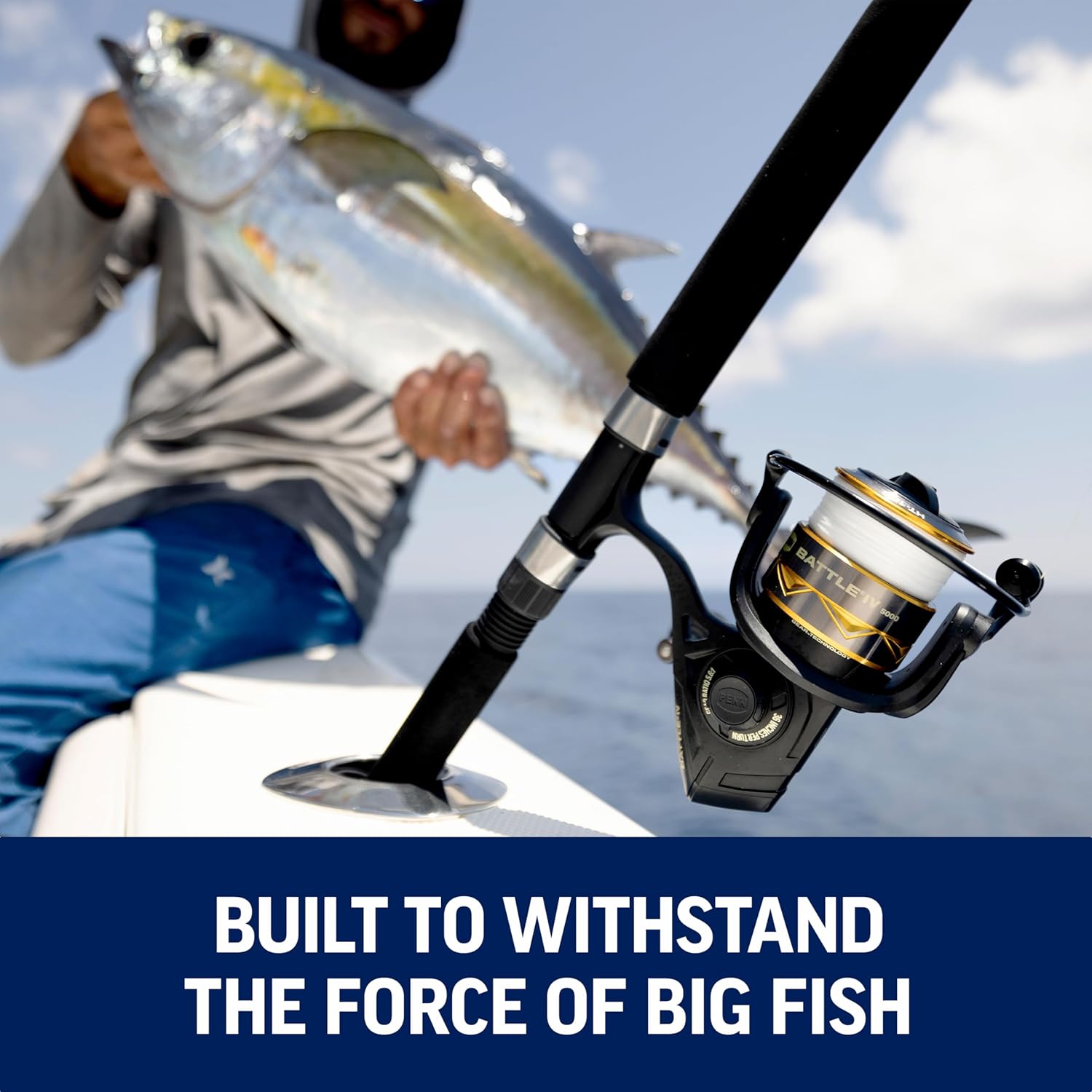
Penn Battle III Surf Spinning Combo
- Visit the official Department of Energy & Environment (DOEE) website.
- Select the appropriate license type (resident or non-resident).
- Complete the online application form.
- Pay the required fee using a credit or debit card.
- Receive an electronic copy of your license via email.
Remember to keep either a physical or electronic copy of your license with you while fishing. It’s advisable to check your spam folder if you don’t receive the license immediately after purchase.
Validity and Renewal
DC fishing licenses are valid on a calendar year basis, from the date of purchase until December 31 of the same year. Anglers planning to fish beyond the current year should mark their calendars to renew their license annually.
Penalties for Non-Compliance
Fishing without a valid license in Washington DC can result in significant penalties. While specific fine amounts for DC were not readily available at the time of writing, it’s important to note that violations of fishing regulations are taken seriously. Penalties may include fines, potential court appearances, and in severe cases, fishing privilege suspensions.
To avoid any legal issues and to support local conservation efforts, always ensure you have a valid license before fishing in DC waters.
Additional Permits and Regulations
Beyond the standard fishing license, certain activities may require additional documentation:
- Scientific Research Permit: Required for the scientific collection of fish or aquatic organisms.
- Species-Specific Regulations: Some fish species in DC waters may have specific catch limits, size restrictions, or seasonal regulations.
For instance, the Potomac River, which borders DC, has specific regulations for striped bass (rockfish) that may differ from other species. Always check the latest DOEE guidelines before your fishing trip to ensure compliance with current regulations.
Comparison with Neighboring States
When fishing in the DC area, it’s crucial to understand how regulations compare with neighboring states:
- Maryland: Requires a separate license for fishing in Maryland waters. Costs vary but are generally higher than DC's fees. Maryland offers short-term licenses in addition to annual ones.
- Virginia: Also requires its own fishing license for Virginia waters. Prices are comparable to Maryland's and include options for short-term licenses.
It’s important to note that there are no reciprocity agreements between DC, Maryland, and Virginia for fishing licenses. If you plan to fish in waters governed by multiple jurisdictions, you may need separate licenses for each.
Types of Fish in DC Waters
Washington DC offers a diverse range of fishing opportunities. Here are some popular species you might encounter:
- Largemouth Bass: Abundant in the Anacostia River and Tidal Basin.
- Striped Bass (Rockfish): Found in the Potomac River, especially during spring and fall migrations.
- Catfish: Both channel and blue catfish are common in DC waters.
- Shad: American and hickory shad run the Potomac in spring.
- Snakehead: An invasive species that has become popular among anglers, found in the Potomac and its tributaries.
- Perch: Yellow and white perch are common, especially in cooler months.
Each species may have specific regulations regarding size limits and catch-and-release practices, so consult the DOEE guidelines for the most up-to-date information.
Seasonal Considerations
Fishing in DC can vary significantly by season:
- Spring (March-May): Prime time for shad runs and the beginning of the largemouth bass spawn.
- Summer (June-August): Excellent for catfish, especially at night. Bass fishing remains productive.
- Fall (September-November): Cooler waters bring increased activity for many species, including striped bass returning to the Potomac.
- Winter (December-February): Opportunities for yellow perch and crappie. Some hardy anglers target blue catfish in the deeper holes of the Potomac.
Remember that seasonal patterns can affect not only fish behavior but also specific regulations. Always check for any seasonal restrictions or special regulations before your fishing trip.
Conservation and Environmental Impact
Purchasing a fishing license in DC does more than just grant you the right to fish. The revenue generated from license sales plays a crucial role in conservation efforts, habitat restoration, and fisheries management. By obtaining a license, you’re directly contributing to the preservation and improvement of DC’s aquatic ecosystems.
The DOEE uses these funds to monitor fish populations, improve water quality, and educate the public about sustainable fishing practices. This ensures that fishing remains a viable recreational activity in the District for generations to come.