
Licensing Requirements: Your Ticket to Texas Crabbing
To legally catch crabs in Texas, you must obtain a fishing license from the Texas Parks and Wildlife Department (TPWD). Here’s what you need to know:
- Resident vs. Non-Resident Licenses: Texas offers different license options for residents and non-residents. Residents can purchase an annual fishing license for $30, while non-residents pay $58 for the same privilege.
- Short-Term Options: If you're just visiting or want to try crabbing for a day, Texas offers a one-day all-water fishing license. Residents pay $11, while non-residents pay $16 for this short-term option.
- License Validity: Most fishing licenses in Texas are valid from the date of purchase through August 31 of the following year.
- Where to Purchase: Licenses can be bought online through the official TPWD website, at local sporting goods stores, or at TPWD offices across the state.
Pro Tip: Always carry your fishing license with you while crabbing. Game wardens can request to see it at any time, and failure to produce a valid license can result in hefty fines.
Crabbing Regulations: Ensuring Sustainable Harvests
Texas imposes specific regulations to maintain healthy crab populations and protect marine ecosystems. Here are the key rules you must follow:
Size and Catch Limits
- Minimum Size: Blue crabs must measure at least 5 inches across the widest point of the body from tip to tip of the spines to be legally kept.
- Daily Bag Limit: There is no daily bag limit for recreational crabbers in Texas. However, it's essential to practice responsible harvesting and only take what you need.
- Egg-Bearing Females: It is illegal to keep female crabs with eggs (known as "sponge crabs"). These must be immediately released to ensure the continuation of the species.
Equipment and Methods
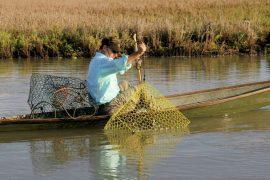
- Crab Traps: Recreational crabbers are allowed to use up to six crab traps. Each trap must be marked with a floating, visible buoy bearing the owner's name and address.
- Trap Design: Crab traps must have at least two escape vents in each crab-retaining chamber and a degradable panel.
- Bait: Using game fish or any part of game fish as bait is prohibited.
Best Practices for Responsible Crabbing
To ensure the longevity of Texas’s crab populations and protect the marine environment, follow these best practices:
- Handle with Care: When checking your traps, handle crabs gently to avoid injury. Use a pair of tongs or gloves to safely remove crabs from traps.
- Release Undersized Crabs: Immediately return any crabs that don't meet the size requirements to the water. Quick release increases their chances of survival.
- Avoid Ghost Fishing: Always remove your crab traps from the water when you're done crabbing. Abandoned traps can continue to catch and kill marine life unnecessarily.
- Respect the Environment: Don't leave any trash or fishing gear behind. Pack out what you pack in to keep Texas waters clean and safe for wildlife.
- Know the Seasons: Be aware of any seasonal closures or special regulations that may affect crabbing in your chosen area.
Where to Crab in Texas
Texas offers numerous excellent crabbing spots along its vast coastline. Some popular locations include:
Penn Pursuit IV Spinning Combo
- Galveston Bay: Known for its abundant blue crab population, Galveston Bay is a favorite among local crabbers.
- Corpus Christi Bay: This area offers great crabbing opportunities, especially around piers and jetties.
- Matagorda Bay: A prime spot for both blue and stone crabs, Matagorda Bay provides diverse crabbing experiences.
- Aransas Bay: This bay system is renowned for its rich marine life, including various crab species.
Before heading out, check the TPWD Fishing Report for up-to-date information on crabbing conditions and catch rates in different areas.